
When most folks think about home protection, what do they think about? You guessed it: some kind of weapon. That’s a great idea and it pays to be ready to do battle, but it’s all too easy to overlook actual home fortification.

Home fortification is another critical link in the protection chain, one that will help you keep control of your space and your property, buying you precious time to organize a defense or call the cavalry when the bad guys are trying to get to you.
All your skills, training, and tools won’t matter much if the bad guys can get in and get to you and your family in seconds. Keep them outside where they belong, and encourage them to take their criminality somewhere else with these 20 clever home fortification strategies.
Better Locks
One of the best things you can do to beef up home security is to invest in solid locks for all outside doors. I’ll bet you’ve already got a deadbolt on your door, maybe even two if you live in a neighborhood that has seen better days, but what’s the quality like on those locks?
Can they resist being picked, raked, or directly attacked? You might be surprised at how sophisticated some criminals are getting, especially when targeting houses in nicer neighborhoods.
The garden variety Masterlocks you get off the shelf at your local big box hardware store just aren’t going to cut it these days.
Improved Door and Window Hardware
Locks are important, but they too won’t do much good unless they have suitably high-end hardware backing them up.
When the bad guys are trying to force entry a door will fail at its weakest point. That’s the screws holding the hinges and locks together, that is what’s going to break and cheap hinges can shear right off.
Invest in better, stronger hardware sets for all of your doors and windows, and pay particular attention to the length and grade of the screws and other fasteners.
At the absolute minimum, you want your door hinge screws to go at least 5 inches into the surrounding frame. This will give you significantly more protection against forced entry by any means.
Anti-Kick Devices on All Exterior Doors
For the ultimate in anti-kick and anti-ram protection, you should install an anti-kick device, commonly called a door devil after the most popular brand name of the same type.
An anti-kick device is a really ingenious add-on hardware kit for any common door. Consisting of metal framing that attaches to the edge of the door and then mates with a corresponding metal frame that you install over the existing door frame.
Functionally, when the door is struck it will transfer the forces to the metal device instead of wood or tiny screws, and spread it out over a much larger area.
Consider these a must-have for all exterior doors, and used in conjunction with a sturdy door, good locks, and good hardware mentioned above, you’ll make your doors virtually impregnable.
Ballistic Window Film
A chronically overlooked home security upgrade, ballistic window film, or transparent appliqués as they are sometimes called, are made by 3M and other manufacturers.
Often used for tornado- and hurricane-prone areas to prevent broken glass and secondary hazards when struck by debris, this material can transform ordinary glass into extremely tough, shatter-resistant glass that is difficult to penetrate even with tools in the case of thicker versions.
The really good versions, while expensive, will make it easier to physically knock out the entire, intact pan rather than break it! Pretty amazing stuff for what is basically a stick-on material! Combine this with the next entry on our list for borderline indestructible window protection.
Stronger Window Frames
Remember what I said about the failure point of any portal being its weakest component?
If you upgrade your windows with ballistic or anti-shatter window film, if someone attacks the window with tools or just with enough force that might knock out the window frame entirely, and then they won’t even have broken glass to contend with when making entry.
Prevent that unpleasant occurrence by installing or strengthening your window frames and conjunction with the window film application.
Door Bars
An oldie but a goodie, door bars, sometimes called prop rods, wedge under the door handle on the interior side of the door to prevent it from being opened, or else rest horizontally across it.
There are lots of flimsy, crappy versions out on the market, but looking for a model from a specialist security supplier like MSIC or DoorJammer will take care of business.
If someone tries to surreptitiously open a door by defeating a lock, or even kicking in the door, these will give you better protection and buy you more time.
They might be redundant if you have a door devil installed, but for better-protected access points like a mudroom this can still be a good supplementary option. They also work wonderfully when traveling!
Sliding Glass Door Bar
One of the single biggest vulnerabilities of any home is a sliding glass door. For starters, they are extremely easy to shatter unless you’ve added the window film described above.
Even then, many types, particularly older ones, are easily lifted right out of the track even when they are latched. These things are just a huge weak point.
However, if you have one of these doors it’s still possible to fortify it by installing a specialty sliding glass door bar and track blocker.
These devices will physically prevent the door from being opened if their typically cruddy locks are defeated or shimmed, and also prevent them from being lifted out of the track by eliminating the slop that is invariably present.
Remember, this isn’t going to stop most people from breaking it if they really want in, but for someone that is hell-bent on a sneaky mode of entry, it can do the job.
Security Shutters
Definitely a good option for anyone who lives in an urban or densely populated suburban area, particularly in places where crime, political demonstrations, and rioting are frequent, security shutters can be lowered to prevent broken glass and missiles from getting inside the house and potentially hurting people inside.
Although they’re ultimately vulnerable to direct and sustained attack by people wanting entry, these are very difficult to get past quickly, and can buy you more than enough time to organize escape, if you can, or a meaningful defense against intruders.
Alarm Systems
Every house, every home, everywhere, needs a good alarm system. And the good news is that quality alarms are more available, more affordable, and more accessible than ever.
Whether you want a standalone system consisting of one or two noise makers and a handful of modular sensors to cover doors, windows, garages, and more or an integrated security system that combines cameras, up next, and other smart devices into a remote net easily controlled from a phone or other station, you’ve got options…mo
The trick, as always, is to have more than just an alarm. In some cases, bad guys might not be deterred by one, and if you have no way to provide for your own defense or to some of the cavalry when the alarm is triggered, it’s just going to be background noise for the event.
Also, as we will learn in the next section, you must be very careful if you are relying on wi-fi integrated alarms because they can be breached.
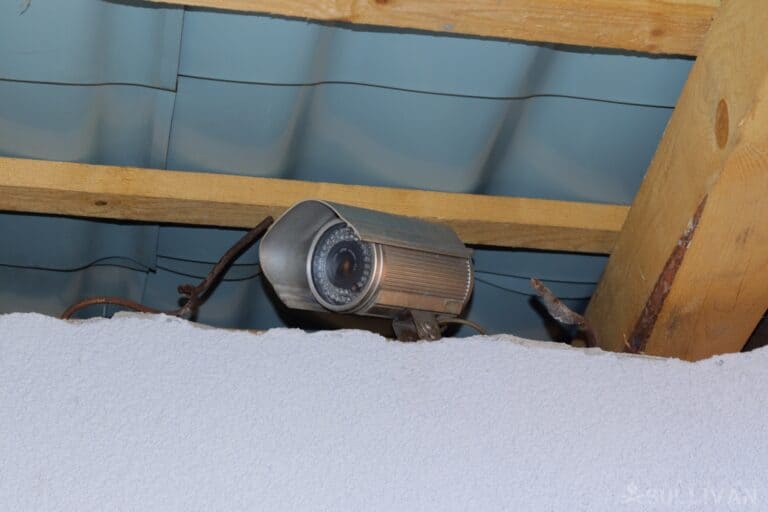
Cameras
Just like alarm systems, we’re in something of a golden era when it comes to personal security cameras and CCTV systems.
Easily installed with even the most rudimentary DIY skills, and with many models now not even requiring wiring to function, cameras can work as standalone devices or be integrated with alarms, lights, and other sensors as detailed above.
But, as tempting as these new varieties of security camera are you’ve got to be cautious if you’re going all wi-fi:
The modern crook, especially the younger ones, tend to be quite technologically savvy and vulnerabilities, exploits and backdoor methods for defeating these cameras are proliferating rapidly.
If you aren’t willing to invest in the cybersecurity side of the defensive equation, you might be better off going with the old-fashioned type if you can afford them and install them.
Motion Lighting
Everyone’s familiar with motion lighting, and arguably it is a convenience option more than a security option. But don’t forget this: cockroaches always scatter when the lights come on.
For criminals who are out prowling and growling at night, illumination greatly increases the risk of early detection, and early detection is often a failure when it comes to their nefarious work.
Setting up motion lights to be bright and work with your defensive plan rather than against it is paramount.
You want motion lighting to cover areas where criminals will be you want motion lighting to cover areas where criminals are likely to hide or likely to be apwaaching from without creating pools of impenetrable darkness that they can exploit against you.
Safe Room
The crown jewel in many a home fortification plan is the safe room. A safe room is exactly what it sounds like: a room where you and your family can retreat to, throw the door closed behind you, and it simply wait for help to show up be it police or someone else.
Safe rooms must be self-contained, hold supplies that you need to hold out, preferably have communications gear inside, and also be resistant to gunfire and forced entry.
Doing one right is usually a big investment, but for a last-ditch “bolt hole” against intruders, nothing beats a safe room.

Perimeter Walls
You’ve heard the old expression before that good fences make good neighbors, but that’s all they make.
For most of us, fences aren’t a great defensive option for protecting our property and our home because they are neither tall enough, strong enough, or insurmountable enough to make much of a difference.
Now walls, on the other hand, are a little bit different. Walls, be they traditional masonry, cinder block, or something else can block gunfire and physically block movement.
They’re a whole lot harder to tear down compared to fences, and walls are a much better mounting point for some seriously nasty defensive implements that are next on our list.
The major drawback with walls, of course, is that you can’t see past them unless you are above them, and neighbors can’t see in to help keep an eye on your property.
Barbed Wire / Spikes
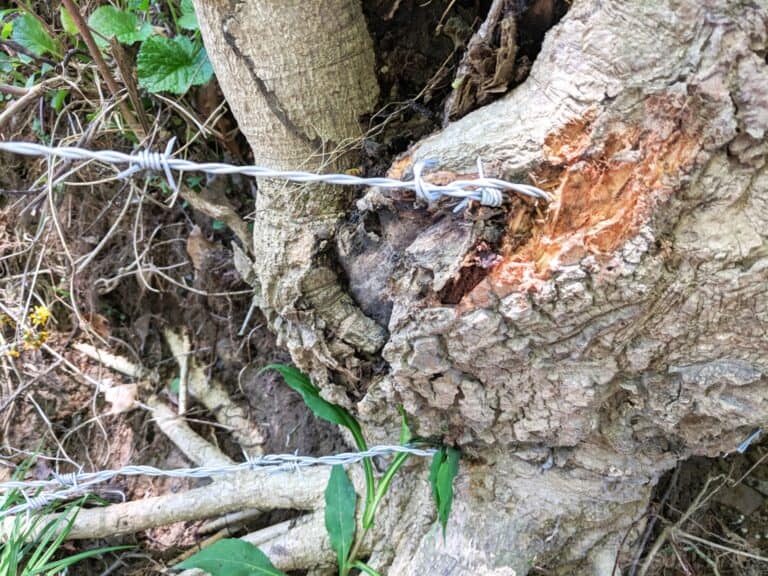
Nothing says “go no farther” than a nice, coiled crown of barbed wire or rows of ferocious spikes on top of a wall or fence. If you have to climb up and over, the last thing you want to risk is your body weight bringing you down on something that can impale you, right?
Depending on how intricate they are, barbed wire and spikes might only be a deterrent, something that can slow down intruders, or they might be a legitimate defensive threat that can result in substantial injuries or even death.
Accordingly, they tend to be highly regulated by laws and furthermore by HOAs and other neighborhood-governing associations. Make sure you check before you commit!
Hedges
A classic and underrated defensive option for properties, hedges, real ones, can be attractive, inoffensive, and nearly as good as a proper wall.
Hedges that grow tall enough and thick enough cannot only give you privacy like a good fence, but they can be enough of an obstacle to ground traffic that someone really can’t force the way through them without risking injury or spending a fair bit of time and making some serious noise.
The defensive value of hedges gets even better if they’re grown over low rock walls or piles of stone, or if you use species of particularly vicious, thorny bushes. No one feels gung-ho about getting punctured trying to wriggle between those branches!
Hostile Plants
And speaking again of hostile plants, choosing the right adornments for your landscape can improve security especially around access points like windows and to the side of well-shaped or L-shaped door entries.
No matter where you live, there is bound to be a species of plant that is incredibly, agonizingly thorny.
From roses to acacia and firethorn to porcupine tomatoes, nature has produced many plants that look more like medieval torture devices!
Even if they aren’t truly dangerous, they will again make noise and slow down people who are trying to creep around in ambush or immediately prior to entry.
Obviously, you’ll want to take care before planting these if you have pets or little kids, and they can be a hazard if you are forced to escape via a window. And then there’s the obvious problem that they do require care to stay alive and effective.
Defensive Landscaping
Defensive landscaping isn’t referring to thorny plants like we just talked about, but is instead a system of analyzing your terrain from a defensive perspective. Look at your property like you are an intruder, and then assess it again like you are a defender.
Where are the likely approaches? Where are the good hiding places? Where is a good cover point against gunfire, or to deliver gunfire? What will shield you from observation?
Looking at your property accordingly, and then making the necessary changes if you can, will go a long way towards keeping you out of trouble in the first place by encouraging would-be intruders to try their luck somewhere else on an easier target…
Fire Extinguishers
When things really go pear-shaped, either during an attack or because of an accident, fire is one of the single biggest hazards out there.
Residential fires cause billions of dollars in damage every year and cost many hundreds of lives. You don’t want that to happen to you, and despite the prevalence of housefires by all causes most homes still don’t have a fire extinguisher inside.
This is purely unacceptable. Make sure you have large ABC-rated fire extinguishers at several points throughout your home. This is the only way you’ll stand a chance of battling a blaze whether you come under attack or suffer from an accident.

Dog
The dog is mankind’s best friend, and whether you want a small, yappy barker as a neurotic but effective alarm, or a large and intimidating guardian dog to really make the bad guys think twice, there is plenty of defensive value in canines.
If you’re dead serious about enhancing your defensive posture, a trained protection dog, while very expensive, might be your literal wingman when the chips are down.
Secure Spare Keys
You’ve got one, I’ve got one, everybody I know has one. Everyone has a stashed spare key outside for rainy days or when you’ve got an emergency that you need a neighbor, friend, or family member to check on while you’re away.
That’s all well and good, but let me tell you that the bad guys know every single one of the so-called good, read likely, hiding places. Accordingly, you’ve got to get truly creative with hiding and securing your key.
If you’ve got it under the mat, under the plant, on the light, or in that conspicuous fake rock or pile of poop that’s been there for ages, you’re not fooling anyone. Don’t give away the keys to your castle!


Tom Marlowe practically grew up with a gun in his hand, and has held all kinds of jobs in the gun industry: range safety, sales, instruction and consulting, Tom has the experience to help civilian shooters figure out what will work best for them.
Tom, the Print Friendly program is compressing the photos imbedded in the text of each of your files. I print many of your fine documents for my survival manual but lately they have become useless to my needs and probably many others, due to the photo compression issue. This started happening when Print Friendly did their last program update. What can be done to correct this problem?
Hi Chuck,
Apologies for the delay. What exactly is the issue with the photos, do they show up blurry on the printer, or are you unable to remove them prior to printing? I don’t think there’s much I can do about it, everything happens on the PrintFriendly website..
Dan